
English
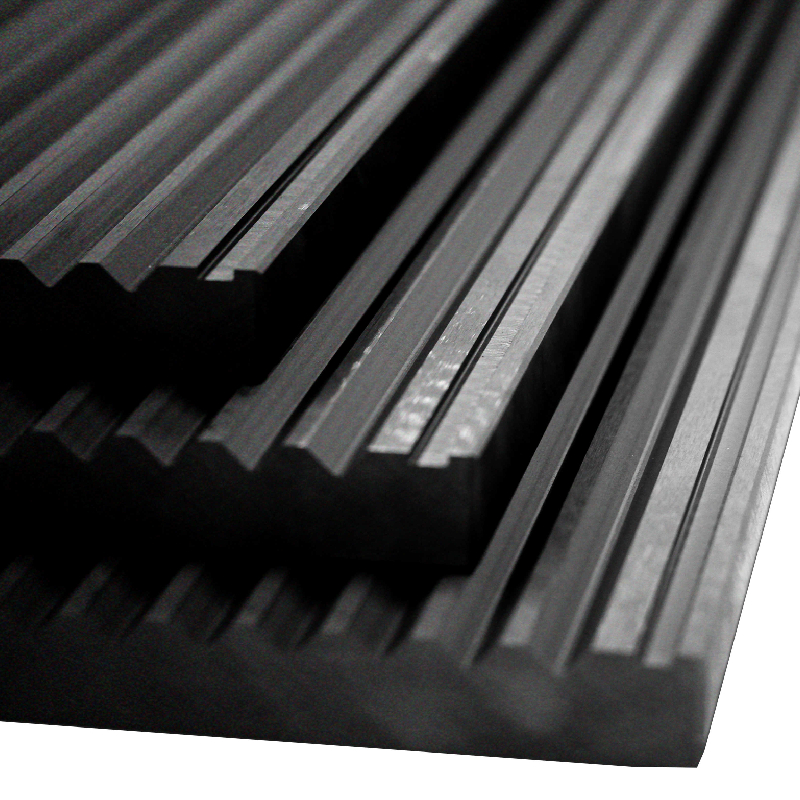
You control the process – we supply the system. True to this motto, Graphite Materials has been manufacturing high-quality products for powder metallurgy shaping for many years. With our system solutions, you benefit from all the advantages of the sintering process for semi-finished and finished parts.
Product Details
PRODUCT Advantage
When positioning metal and ceramic components for high-temperature treatment on charging plates from Graphite Materials, it is important to consider the specific requirements of the process to ensure optimal results. Graphite charging plates offer a number of advantages for this purpose, including predefined surface geometries that stabilize the product layer and minimize shape deviations. Additionally, the use of posts to stack the plates or sheets can provide greater process efficiency.
To begin, the metal and ceramic components should be carefully arranged on the charging plates in a manner that allows for uniform heating and treatment. The predefined surface geometries of the charging plates can help to ensure that the components are securely positioned and that heat is distributed evenly throughout the process. This is particularly important for high-temperature treatments, as any uneven heating or instability in the product layer can lead to suboptimal results.
In addition to the positioning of the components on the charging plates, the use of posts to stack the plates or sheets can further enhance process efficiency. By stacking the plates, multiple components can be treated simultaneously, maximizing the use of the available space and reducing the overall processing time. This can be especially beneficial for high-volume production or when working with large quantities of components.
Furthermore, the use of posts can also help to facilitate the handling and transportation of the charging plates and components, making it easier to load and unload them from the treatment equipment. This can contribute to overall process efficiency and safety, as well as reducing the risk of damage to the components during handling.
Overall, the combination of predefined surface geometries on the charging plates and the use of posts for stacking can significantly improve the high-temperature treatment process for metal and ceramic components. By carefully considering the positioning and arrangement of the components, as well as utilizing the features of the charging plates, manufacturers can achieve more consistent and reliable results while maximizing process efficiency.
Related Products
In 1985, Datong Locomotive Works realized that electric locomotives were the important development direction of China railway locomotive and rolling stock industry in the future, and put forward the production layout idea of "Nanzhu (Zhuzhou Electric Locomotive Works) and Datong Locomotive Works".
Shaoshan Type 3 electric locomotive is my country’s second generation 6-axle passenger and cargo locomotive. The locomotive adopts bridge-type full-wave rectification and realizes thyristor phase-controlled smooth voltage regulation. The locomotive adopts single-phase AC 25kV 50Hz voltage system and has a maximum operating speed of 100km/h.

The SS3B fixed heavy-duty electric locomotive is a 12-axle freight electric locomotive. It consists of two identical 6-axle locomotives connected by a coupler and a windshield. The two sections are equipped with electrical system high-voltage connectors, control cables, and network shielding. Line and air system control ducts. The entire vehicle can be controlled synchronously from any cab. The locomotive adopts single-phase power frequency system, voltage 25kV, AC-DC transmission, and the maximum operating speed of the locomotive is 100km/h.
Shaoshan 4 improved electric locomotive is an 8-axle freight locomotive. The locomotive consists of two identical four-axle locomotives connected by a coupler and a windshield. The two workshops are equipped with high-voltage connectors for the electrical system, reconnection control cables and air brake system control ducts. The entire vehicle can be synchronously controlled from the driver's cab of any one of the vehicles. The two locomotives can also be separated and used independently as a four-axle locomotive.