
English
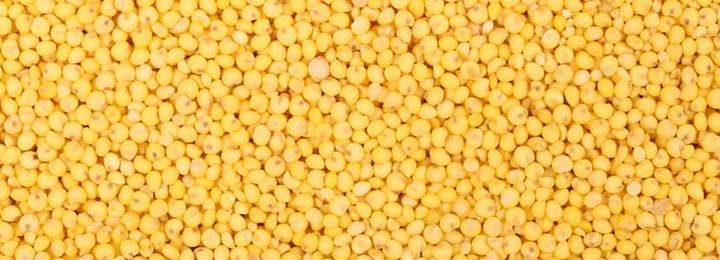
Get Amazing health benefits of millets. Add this healthy cereal grain helps in coronary artery disorder, weight loss, colon cancer. Millets help in high blood pressure, preventing Celiac disease, diabetes problems, a good source of antioxidants, helps in slowing down muscle degradation, aids in sleep helps in relieving menstrual cramps, aids breast milk production, improves skin elasticity.
Millets are a group of highly variable small-seeded grasses, widely grown around the world as cereal crops or grains for human food and as fodder. In India, millets have been mentioned in some of the oldest Yajurveda texts, identifying foxtail millet (priyangava), Barnyard millet (aanava) and black finger millet (shyaamaka), thus indicating that millet consumption was very common, pre-dating to the Indian Bronze Age (4,500BC). Millets however lack the nutrients critically important for a person’s body.
Millet is counted on around the world to provide basic nutrition for many developing nations. Every 100 grams of millets contain 378 calories of energy, 4.2 grams of total fat out of which saturated fat is 0.7 grams, total carbohydrate content is 73 grams, dietary fibre is 8.5 grams, protein content is 11 grams, folate is 85 mcg, niacin is 4.720 mg, Pantothenic acid is 0.848 mg, Riboflavin is 0.290 mg, Thiamine is 0.421 mg, Vitamin B6 is 0.384 mg, Vitamin E 0.05 mg, Tocopherol alpha is 0.05 mg, Vitamin K is 0.9 mcg, Calcium is 1%, Iron content is 17%, Copper is 38%, Magnesium is 28%, Manganese is 82%, Phosphorus is 28%, Potassium is 4%, Selenium is 4%, Zinc is 11%.
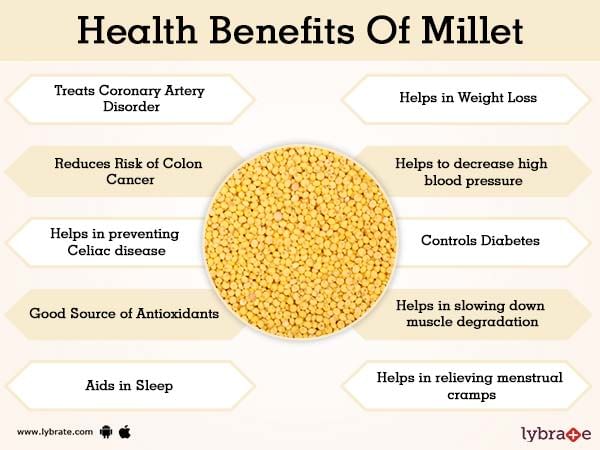
Consumption of millet in large amounts helps decrease triglyceride levels in the body. It thins the blood to prevent blood platelet clumping, thereby reducing the risk of sunstroke and coronary artery disorder.
Millets contain tryptophan, an amino acid that lowers appetite and helps in managing weight. It digests at a slower rate and keeps the stomach full for a longer period of time. Millets are high in fibre and satiate hunger quickly, preventing from overeating. People who want to lose weight should incorporate millets in at least one of their main meals. Different types of millet are available for weight loss such as foxtail millet, Kodo millet, finger millet, and pearl millet. You can make different types of food recipes using this millet without compromising with the taste.
Foxtail Millet contains both fibers and phytonutrients, the combination of which is believed to reduce the risk of developing colon cancer. Lignan, a phytonutrient in millet, is converted into mammalian lignan in the intestine that protects from breast cancer. In fact, the consumption of millet can lower the risk of developing breast cancer by 50%.
Magnesium present in millet which relaxes the muscles that line the inside of the arterial wall, which helps to reduce blood pressure. Millet also reduces the severity of asthma and frequency of migraines.
Celiac is a disease that damages the small intestine and interferes with the absorption of nutrients from food. People who suffer from this disease cannot tolerate gluten. They can start including millet in their diet since it is completely gluten-free.
The low glycemic index in millet slows down the digestion process and keeps the blood sugar level at a constant ratio. Millets increase insulin sensitivity for people suffering from diabetes and also helps to control the sugar levels for non-diabetics especially type 2 diabetes.
The high amount of antioxidants present in millets fights free radicals present in the body which slows down the ageing process.
Millets are high protein grains and contain lysine, an amino acid which slows down muscle degradation and helps to build leaner muscles.
Tryptophan in millet raises the serotonin level in the body which helps in reducing stress. A cup of millet porridge every night can help to get sound and peaceful sleep.
Because of its high level of magnesium, millet is a great food for women who suffer from unbearable pain and cramps during their menstrual cycle.
Pregnant and lactating women are advised to consume Ragi in high amounts to increase the production of breast milk in their body. This enables the mother to feed the child for a longer period of time.
Millet is rich in amino acids called L-lysine and L-proline. Millet help to create collagen in the body, a substance which gives structure to the skin’s tissue. Thus, eating millet fortifies the collagen level to improve skin’s elasticity and makes it less prone to wrinkles.
