
English
Product Details
 Product Details
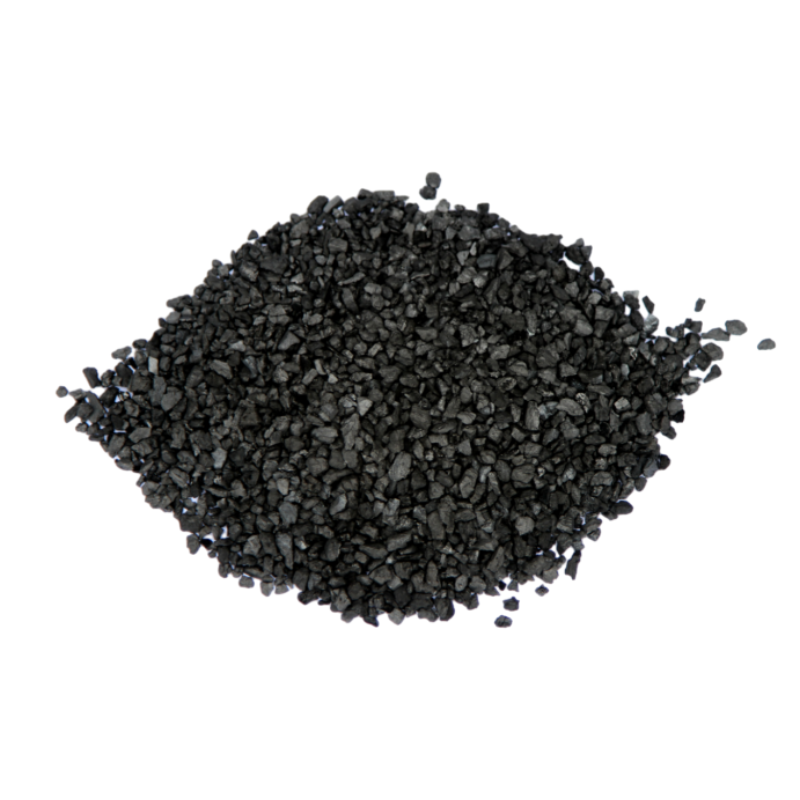
Activated carbon, also known as activated charcoal, is a highly versatile and valuable material used in various industries for its exceptional properties. It is produced by heating carbonaceous materials, such as wood, coal, or coconut shells, at high temperatures in the absence of air. This process creates a network of pores and a high surface area, giving activated carbon its unique properties.
One of the key features of activated carbon is its development of mesopores, which are pores with a diameter between 2 and 50 nanometers. These mesopores significantly enhance the material's adsorption capacity, allowing it to effectively capture impurities and pollutants from both gases and liquids. This makes activated carbon a crucial component in purification processes for urban sewage treatment, drinking water, and industrial wastewater treatment.
In addition to its mesoporous structure, activated carbon possesses high mechanical strength, enabling it to withstand the physical demands of various applications. This durability ensures that it can be used in filtration and purification systems without losing its effectiveness over time.
Furthermore, activated carbon is renowned for its strong adsorption capacity, which is the result of its large surface area and highly porous structure. This adsorption capability allows it to attract and retain a wide range of contaminants, including organic compounds, volatile organic compounds (VOCs), chlorine, and other impurities commonly found in water and air.
Moreover, activated carbon is a renewable resource, as it can be regenerated and reused through processes such as thermal reactivation or chemical regeneration. This makes it a sustainable solution for purification and remediation processes, reducing the overall environmental impact of waste management and treatment systems.
Overall, the unique combination of mesopores, high mechanical strength, strong adsorption capacity, and renewability makes activated carbon an indispensable material for addressing pollution and contamination challenges in urban and industrial settings. Its versatility and effectiveness in removing impurities and pollutants from gas and liquid streams make it a critical component in environmental protection and public health initiatives worldwide.
Related Products
In 1985, Datong Locomotive Works realized that electric locomotives were the important development direction of China railway locomotive and rolling stock industry in the future, and put forward the production layout idea of "Nanzhu (Zhuzhou Electric Locomotive Works) and Datong Locomotive Works".
Shaoshan Type 3 electric locomotive is my country’s second generation 6-axle passenger and cargo locomotive. The locomotive adopts bridge-type full-wave rectification and realizes thyristor phase-controlled smooth voltage regulation. The locomotive adopts single-phase AC 25kV 50Hz voltage system and has a maximum operating speed of 100km/h.

The SS3B fixed heavy-duty electric locomotive is a 12-axle freight electric locomotive. It consists of two identical 6-axle locomotives connected by a coupler and a windshield. The two sections are equipped with electrical system high-voltage connectors, control cables, and network shielding. Line and air system control ducts. The entire vehicle can be controlled synchronously from any cab. The locomotive adopts single-phase power frequency system, voltage 25kV, AC-DC transmission, and the maximum operating speed of the locomotive is 100km/h.
Shaoshan 4 improved electric locomotive is an 8-axle freight locomotive. The locomotive consists of two identical four-axle locomotives connected by a coupler and a windshield. The two workshops are equipped with high-voltage connectors for the electrical system, reconnection control cables and air brake system control ducts. The entire vehicle can be synchronously controlled from the driver's cab of any one of the vehicles. The two locomotives can also be separated and used independently as a four-axle locomotive.